Start With DB Box Access, Not Only Storage
Many Singapore HDB and BTO entryways have the distribution board, switches or utility access near the main door. A custom shoe cabinet can make this area look much neater, but the DB box should not be permanently blocked. The cabinet must allow safe access for electrical checks, circuit resets and future maintenance. This is why a shoe cabinet with DB box concealment needs more planning than a simple storage cabinet.
Before choosing laminate colour or display shelves, take clear photos of the DB box, switches, trunking, wall width, main door swing and nearby walkway. The design should hide visual clutter while still making the panel easy to open. If the cabinet only looks good when closed but becomes difficult during a power trip, it has not solved the real entryway problem.
- Keep the DB box accessible for maintenance and circuit resets
- Photograph switches, trunking, door swing and wall width
- Plan concealment together with daily shoe storage needs
Shoe Storage Depth, Ventilation and Shelf Layout
Shoe cabinet depth should match the family's footwear. Slippers, sneakers, heels, boots and children's shoes need different shelf heights. Adjustable shelves are useful because shoe sizes and habits change over time. A full-height cabinet can store many pairs, but it should still allow ventilation so shoes do not trap smell in a closed foyer.
Ventilation can be handled through gaps, louvred sections, open niches or a layout that separates daily shoes from less-used pairs. Do not fill every centimetre with sealed doors if the family returns home with damp shoes during rainy weather. Frequently worn shoes should be easy to reach near the entrance. Seasonal or formal shoes can go higher or deeper inside the cabinet.
- Use adjustable shelves for different shoe heights
- Include ventilation for daily footwear
- Place frequently used shoes at easy reach near the door
Glass Display, Seating and Drop Zones
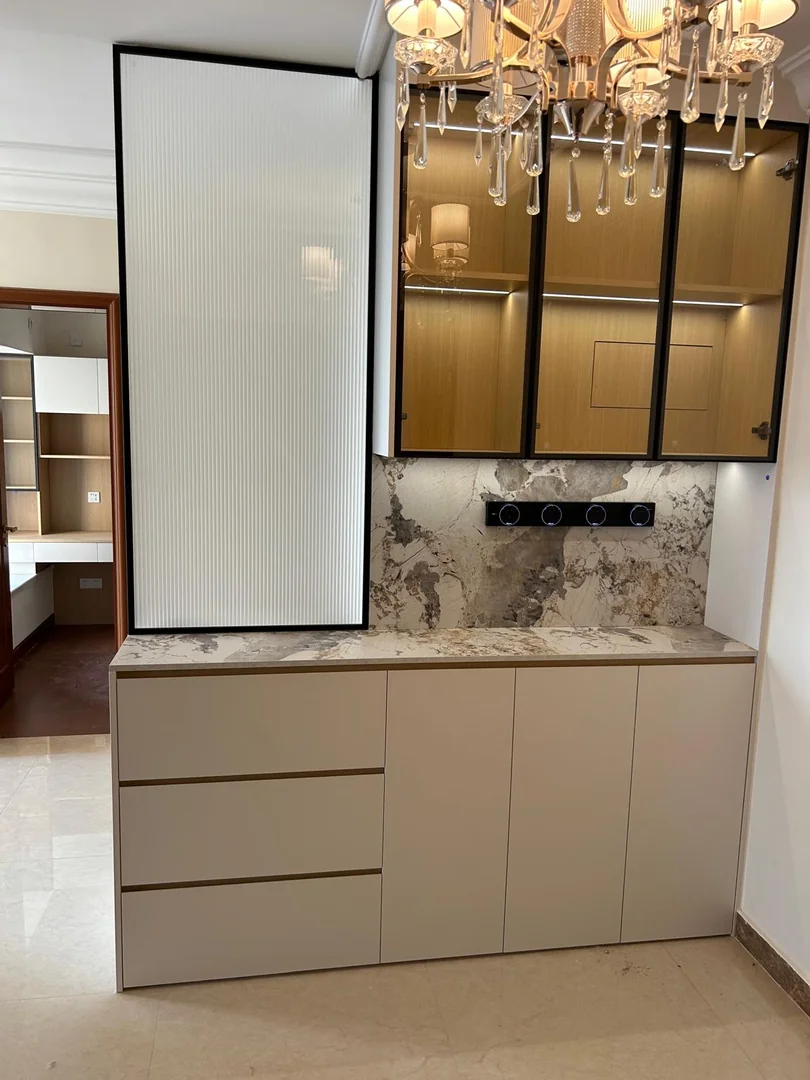
Some entryway cabinets include a glass display section for decor, collectibles, keys, fragrance, bags or small daily items. This can make the foyer feel more welcoming, but it should not reduce the practical shoe capacity too much. A small open niche or glass display area is often enough. If the foyer is narrow, too much display depth can make the walkway feel tight.
A seating bench can help when putting on shoes, especially for children or elderly family members. It needs suitable height and enough clear space in front. A small drop zone for keys, masks, umbrellas or delivery items can also be useful. The key is to design around the household's actual leaving-home and coming-home routine, not only around a photo reference.
- Use glass display selectively so the cabinet stays practical
- Check bench height and walkway clearance before adding seating
- Include a small drop zone for keys, umbrellas or daily items
Door Swing, Walkway and Main Entrance Details
HDB foyers can be tight. The shoe cabinet must be planned around main door swing, gate clearance, corridor flow, household shelter doors and nearby switches. If cabinet doors open into the walkway, daily use may become awkward. Sliding, lift-up, push-open or mixed door types may be considered depending on the wall length and storage layout.
A floating base can make cleaning easier and help a narrow foyer feel lighter. A full-height cabinet can provide more storage, but very dark finishes may make the entrance feel heavy. If the DB box is above eye level, the access panel should still be reachable without moving many items. Small details at the foyer matter because this is the first and last zone used every day.
- Check main door, gate and cabinet door swing together
- Use lighter finishes or floating bases for compact foyers
- Keep DB access reachable without emptying the cabinet
Common Mistakes to Avoid
One common mistake is hiding the DB box behind shelves that must be emptied every time access is needed. Another is building a shoe cabinet too deep for a narrow foyer, leaving little standing space when the door is open. Homeowners also sometimes request too many display features, which reduces shoe storage and makes the entryway busy.
Avoid sealed shoe storage with no ventilation if the cabinet will hold daily shoes. Avoid fixed shelves only, because shoe types change. Also avoid confirming the design before checking site measurements. Floor skirting, uneven walls, switches, power points and door frames can all affect the final cabinet depth and panel alignment.
- Do not block DB box access with fixed shelves
- Avoid oversized cabinet depth in narrow foyers
- Confirm ventilation, skirting and switches before production
FAQ: Cost Factors and Quote Preparation
The cost of an HDB shoe cabinet with DB box concealment in Singapore depends on cabinet height, width, depth, laminate finish, number of doors, ventilation details, glass display section, seating bench, drawers, lighting, hardware and site installation complexity. A simple low shoe cabinet will usually cost less than a full-height foyer cabinet with DB access panels, display glass and bench seating.
Can Glee Deco quote from a floor plan? Yes, for initial planning, but final measurement is needed before production. What should I send on WhatsApp? Send your floor plan, foyer photos, DB box photos, wall length, door swing photos, shoe quantity, preferred storage style and reference images to Glee Deco & Furniture at +65 8742 6767.
- Price depends on size, DB access, ventilation, display, bench and hardware
- Send foyer photos, DB box photos, floor plan and shoe storage needs
- WhatsApp +65 8742 6767 for a shoe cabinet quote