
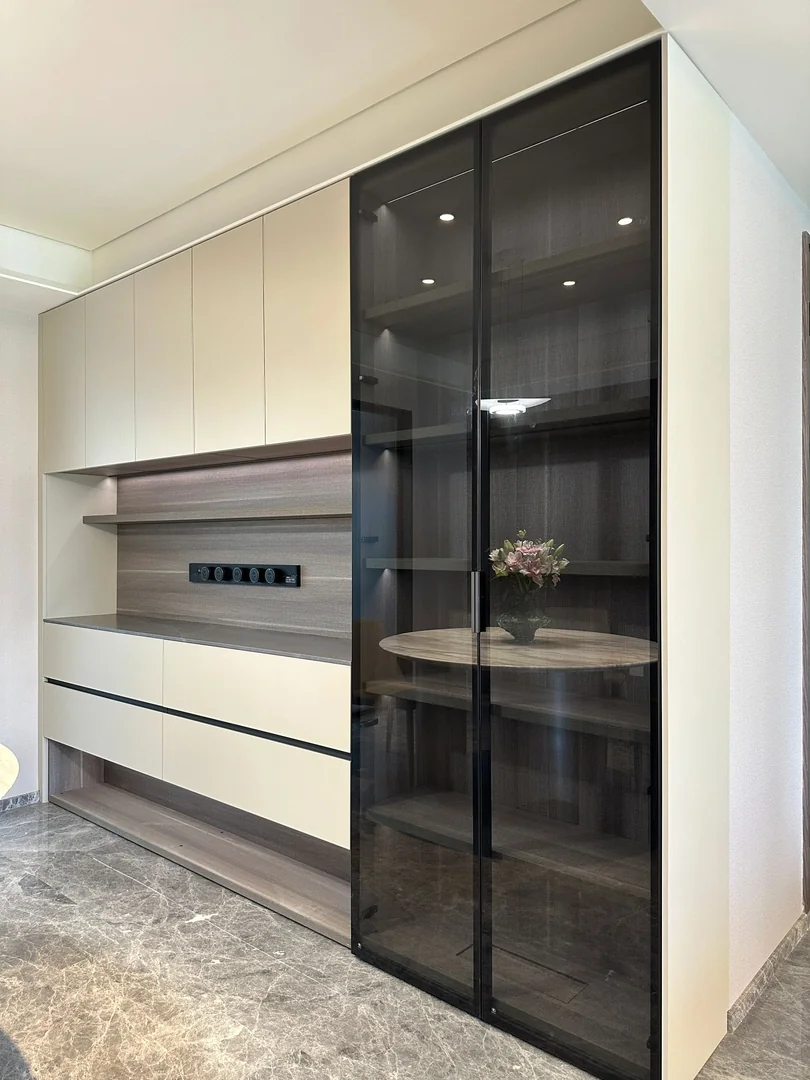
Start With What You Want to Display
A glass display cabinet can make a Singapore HDB living room feel more personal, especially when it is used for collectibles, books, awards, glassware, decor or travel pieces. It can also be part of a TV feature wall, dining cabinet or full-height storage wall. The best display cabinet is not simply the one with the most shelves. It is the one that shows the right items clearly while keeping the room calm and easy to maintain.
Before choosing glass colour or lighting, list what will actually go inside. Tall figurines, handbags, trophies, books and dinnerware all need different shelf heights and depths. If the cabinet is mainly for daily storage, too much glass may expose clutter. If it is mainly for display, too many closed doors may hide the reason for building it. A balanced layout usually combines glass display zones with closed lower cabinets or side storage.
- List the items before deciding shelf height and cabinet depth
- Use glass zones for display and closed cabinets for clutter
- Avoid copying a showroom cabinet without checking real item sizes
Glass Door Types, Frames and Safety
Glass doors can look light, but their frame and opening style affect daily use. Hinged glass doors give good access when there is enough space in front of the cabinet. Sliding glass doors may suit tighter walkways, but only part of the cabinet opens at one time. Framed glass can feel more structured, while frameless glass looks cleaner but needs careful hardware selection and alignment.
Safety and maintenance matter in family homes. If children use the living room, discuss suitable glass type, stable shelves and reliable hinges. Very tall glass doors should feel secure and easy to open. Fingerprints are also more visible on clear glass, especially near handles. Fluted, tinted or reeded glass can soften the view of stored items, but it changes the display effect.
- Choose hinged or sliding glass based on walkway clearance
- Confirm glass type, door height and hardware quality
- Use tinted or fluted glass when you want a softer display
Shelf Depth, Lighting and Dust Control
Shelf depth should match the displayed items. Deep shelves can hold larger objects, but small items may get lost visually. Shallow shelves look elegant for collectibles and decor, but they may not fit books or storage boxes. Adjustable shelves are useful when the collection changes over time. If the cabinet includes heavy items, shelf thickness and support points should be planned properly.
Lighting can make a glass display cabinet feel premium, but it should be practical. LED strips, spotlights or under-shelf lighting need wiring routes, switch locations and driver access. Warm light can suit wood finishes and decor, while cooler light may suit glassware or modern displays. Dust control is another reason to use doors, but no cabinet is magically maintenance-free. Good gaps, seals and easy-to-clean shelf surfaces still matter.
- Match shelf depth to collectibles, books or dinnerware
- Plan LED wiring, switch location and maintenance access early
- Use doors to reduce dust, but keep shelves easy to clean
Living Room, Dining Area and TV Wall Placement
In HDB living rooms, a display cabinet often shares space with the sofa, TV wall, dining table, shoe cabinet or walkway. Placement should protect movement first. A full-height glass cabinet beside a narrow walkway can feel fragile or crowded. A lower cabinet with glass upper shelves may work better when the room needs storage but still needs visual breathing space.
If the display cabinet connects to a TV feature wall, check TV size, viewing height, router storage and cable routing. If it sits near the dining area, consider dinnerware storage, open counter space and serving convenience. Finishes should coordinate with flooring, curtains, sofa colour and nearby carpentry. Matching every material is not required, but the living room should feel intentionally planned.
- Keep walkways comfortable before adding full-height display storage
- Coordinate display cabinets with TV wall and dining storage
- Match finishes with flooring, sofa, curtains and nearby carpentry
Common Mistakes to Avoid
One common mistake is making every shelf glass-fronted. This can expose too many small items and make the living room look busy. Another mistake is using deep shelves for small collectibles, which makes the display look dark and cluttered. A third mistake is adding LED lighting without discussing electrical scope, driver access and future replacement.
Homeowners should also avoid building a display cabinet only for one current collection if the room may need different storage later. A flexible cabinet can include adjustable shelves, a few closed sections and a clean layout that still works if the display items change. The goal is a living room that looks organised in daily life, not only in a renovation photo.
- Avoid exposing every storage item behind glass
- Do not make shelves deeper than the display items require
- Confirm lighting and electrical scope before production
FAQ: Cost Factors and Quote Preparation
The cost of a glass display cabinet in Singapore depends on cabinet size, height, glass type, frame detail, number of shelves, LED lighting, drawer and door quantity, laminate finish, hardware and site installation complexity. A small display section above a low cabinet will usually cost less than a full-height cabinet with framed glass doors, lighting and integrated storage.
Can Glee Deco quote from photos and a floor plan? Yes, for initial planning. Final dimensions should still be confirmed by site measurement before production. What should I send on WhatsApp? Send your floor plan, living room photos, wall length, display item sizes, TV or dining position, preferred glass style and reference images to Glee Deco & Furniture at +65 8742 6767.
- Price depends on size, glass type, shelves, lighting, hardware and site condition
- Send floor plan, wall photos, display item sizes and reference images
- WhatsApp +65 8742 6767 for a glass display cabinet quote