
Built-in vs Freestanding Wardrobe: What Singapore Homeowners Need to Know
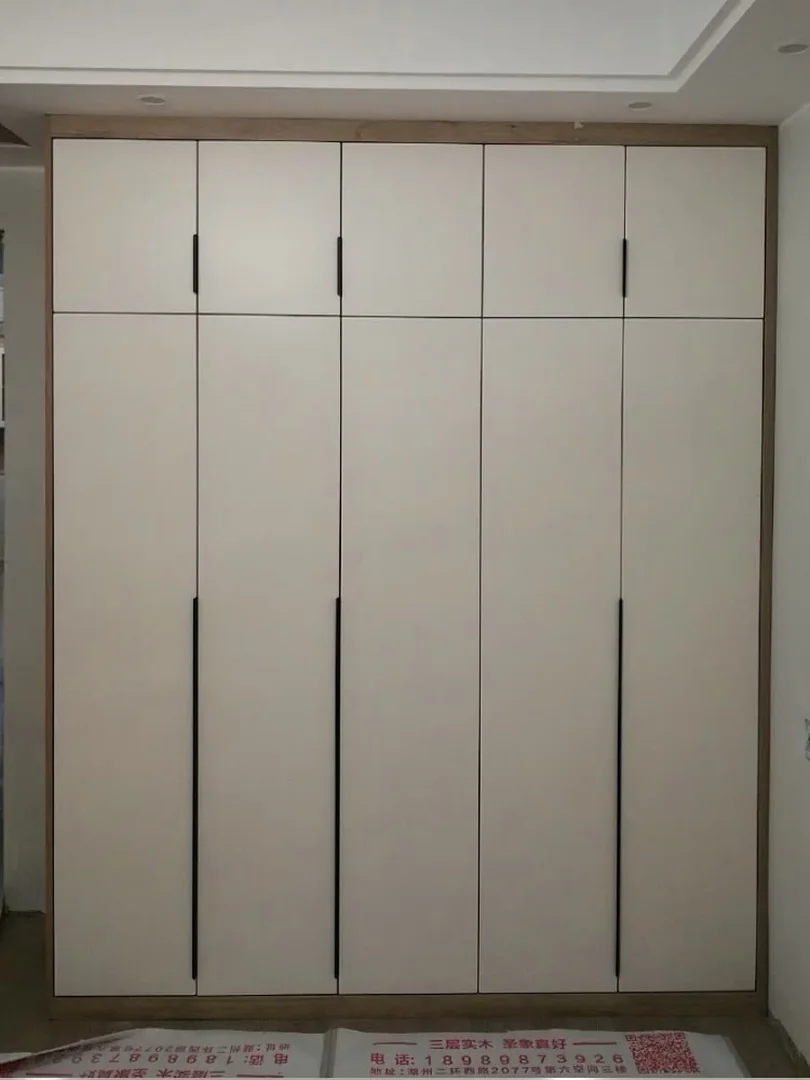
The wardrobe is often the single largest piece of furniture in a Singapore bedroom, and the choice between built-in and freestanding has consequences that ripple through your entire renovation. A built-in wardrobe is custom-designed and installed as a permanent fixture, attached to the wall and extending from floor to ceiling. A freestanding wardrobe is a self-contained unit that can be moved, rearranged, or taken with you when you relocate.
In Singapore, this decision is more than a matter of style. HDB flats and BTO units come with fixed room dimensions that rarely match standard furniture sizes. Condo bedrooms, while sometimes larger, often have irregular corners, bay windows, or air-conditioning trunking that complicates furniture placement. The tropical humidity also places unique demands on wardrobe materials—freestanding units bought off the shelf may not be built with Singapore's climate in mind.
This guide compares the two options across the dimensions that matter most to Singapore homeowners: cost, space utilisation, durability in humid conditions, design flexibility, and resale considerations. Whether you are moving into a new BTO flat, renovating a resale HDB, or furnishing a condo, understanding the trade-offs will help you make a confident decision.
- Built-in wardrobes are permanent, custom-fitted fixtures attached to walls and ceiling
- Freestanding wardrobes are self-contained units that can be moved or replaced
- Singapore's fixed room dimensions in HDB/BTO flats rarely match standard furniture sizes
- Tropical humidity affects wardrobe materials differently depending on construction quality
- The right choice depends on your home type, budget, timeline and how long you plan to stay
Cost Comparison: What You Actually Pay in Singapore
The upfront price gap between built-in and freestanding wardrobes is the first thing most homeowners notice, but the full cost picture is more nuanced than the sticker price suggests. A quality freestanding wardrobe for a Singapore master bedroom—think solid wood or engineered wood from a reputable brand like IKEA, Castlery, or HipVan—typically costs between S$800 and S$2,500 for a 3-door unit. Larger 4-door or sliding-door models can reach S$3,000 to S$4,500. These prices include the unit itself but exclude delivery and assembly, which may add S$80 to S$200 depending on the retailer.
A built-in wardrobe from a Singapore custom furniture supplier for the same master bedroom typically ranges from S$2,500 to S$5,000, depending on width (measured per foot run), material grade, internal layout complexity, and hardware choices. At first glance, the built-in option appears significantly more expensive—and for the simplest comparison, it is. But that comparison misses several factors that narrow the gap over time.
Built-in wardrobes eliminate the top gap entirely, using every inch of vertical space from floor to ceiling. A freestanding wardrobe in a standard HDB bedroom with a 2.6-metre ceiling height typically leaves 30 to 50 centimetres of wasted space above the unit. That gap collects dust, requires cleaning, and represents lost storage capacity. To match the storage volume of a full-height built-in wardrobe, you would often need a larger or taller freestanding unit, which pushes the price closer to built-in territory.
Material quality is another hidden cost factor. Entry-level freestanding wardrobes often use particle board or thin MDF, which can swell and delaminate in Singapore's humidity within 3 to 5 years. Quality built-in wardrobes use plywood carcasses (E1, E0, or ENF grade) that resist moisture far better. Replacing a warped freestanding wardrobe after 5 years effectively doubles your cost, while a well-built plywood wardrobe can last 15 to 20 years with minimal maintenance. Over a decade, the annualised cost difference shrinks considerably.
- Freestanding wardrobe (3-door quality unit): S$800–S$2,500 for master bedroom
- Built-in wardrobe (custom, full-height): S$2,500–S$5,000 depending on width and materials
- Freestanding units leave 30–50 cm of wasted space above the wardrobe in standard HDB rooms
- Cheap freestanding wardrobes (particle board) may need replacement within 3–5 years in Singapore humidity
- Quality built-in plywood wardrobes can last 15–20 years, narrowing the long-term cost gap
Space Efficiency: Why Every Centimetre Counts in Singapore Bedrooms
Space is the most valuable commodity in a Singapore home, and this is where built-in wardrobes have their strongest argument. A typical master bedroom in a 4-room HDB BTO flat measures approximately 3.4 metres by 3.0 metres, with one wall partially consumed by the bedroom door and another by the window. The remaining usable wall for a wardrobe is often 2.0 to 2.5 metres wide. A freestanding wardrobe comes in fixed widths—typically 100 cm, 120 cm, or 150 cm for a 3-door unit—meaning you either accept a gap on one side or squeeze the unit into a space it does not quite fit.
Built-in wardrobes are measured and manufactured to the exact wall length, including allowances for skirting boards, uneven walls, and ceiling beams. In a 2.3-metre-wide wall space, a built-in wardrobe uses every centimetre. A freestanding wardrobe in the same space might only use 1.5 metres, wasting 80 cm—enough space for a small chest of drawers or a laundry basket that now needs to sit elsewhere in an already tight room.
The vertical dimension matters even more. HDB and BTO flats have a standard ceiling height of 2.6 metres, while condos range from 2.8 to 3.2 metres. A built-in wardrobe reaches the full ceiling height, adding approximately 30 to 50 centimetres of storage compared to a typical freestanding unit that tops out at 2.0 to 2.3 metres. That extra height can accommodate two additional shelves for luggage, seasonal bedding, or rarely used items—storage that would otherwise require separate cabinets or clutter the top of a freestanding unit.
Corner and irregular spaces are another area where built-in wardrobes shine. Many Singapore bedrooms have awkward corners created by the household shelter (bomb shelter) wall protruding into the room, or by air-conditioning trunking running along the ceiling perimeter. A built-in wardrobe can be designed to wrap around these obstructions, turning dead space into usable storage. A freestanding wardrobe simply cannot adapt to these conditions, leaving gaps that collect dust and look unfinished.
- Typical 4-room HDB master bedroom has only 2.0–2.5m of usable wardrobe wall space
- Built-in wardrobes use 100% of the available wall width; freestanding often wastes 30–80 cm
- Full-height built-in wardrobes add 30–50 cm of vertical storage vs standard freestanding units
- Built-in designs can wrap around bomb shelter protrusions, aircon trunking and uneven walls
- Wasted space around freestanding wardrobes collects dust and reduces usable room area
Humidity, Durability and Maintenance: The Singapore Climate Factor
Singapore's year-round humidity of 70 to 90 percent is the silent enemy of bedroom furniture. When air-conditioning is switched off during the day, humidity rises inside closed wardrobes, creating conditions where mould can grow, wood can warp, and adhesives can fail. The material and construction quality of your wardrobe determines how well it survives this daily cycle.
Freestanding wardrobes at the lower end of the price spectrum—especially those made from particle board or thin MDF with veneer surfaces—are the most vulnerable. Particle board absorbs moisture through edges, joints, and any surface scratches, causing swelling that cannot be reversed. Once the board swells, drawer runners misalign, doors no longer close properly, and the structural integrity of the unit degrades. In Singapore's climate, a particle-board wardrobe used without daily air-conditioning can show visible deterioration within 2 to 3 years.
Quality built-in wardrobes from Singapore custom furniture suppliers use plywood as the carcass material, which is inherently more moisture-resistant due to its cross-laminated construction. When paired with proper PVC edge banding that seals all exposed edges, a plywood wardrobe can handle Singapore's humidity cycles without significant degradation. ENF-grade plywood adds the benefit of ultra-low formaldehyde emission, which matters for bedrooms where you spend 6 to 8 hours breathing the air each night.
Maintenance is another consideration. Freestanding wardrobes are easier to clean behind and underneath if you can move them, but the top surface (which is not designed to be seen) collects dust and is difficult to access. Built-in wardrobes have no gap at the top, sides, or bottom—dust simply has nowhere to accumulate. The trade-off is that built-in wardrobes cannot be moved for deep cleaning, so the interior must be designed with accessible compartments from the start. On balance, a well-designed built-in wardrobe requires less ongoing maintenance than a freestanding unit in Singapore's dusty environment.
For families with young children, built-in wardrobes offer an important safety advantage: they are fixed to the wall and cannot tip over. Freestanding wardrobes, particularly tall and narrow models, pose a tipping risk if a child climbs on open drawers or doors. While anti-tip brackets can be installed on freestanding units, many homeowners skip this step, and the brackets themselves can fail if not properly anchored to a solid wall.
- Singapore humidity (70–90%) causes particle board wardrobes to swell and delaminate within 2–5 years
- Plywood carcasses with sealed edge banding resist moisture far better than particle board or MDF
- ENF-grade plywood adds low-formaldehyde safety for bedrooms where you spend 6–8 hours nightly
- Built-in wardrobes have no dust-collecting top/side gaps; freestanding units require regular gap cleaning
- Built-in wardrobes are wall-fixed and cannot tip over—an important safety consideration for families with children
Design Flexibility, Resale Value and Making the Right Choice
Design flexibility is where the two options diverge most sharply. A built-in wardrobe can be configured with any combination of hanging rods, shelves, drawers, pull-down rails, tie racks, jewellery trays, and even integrated LED lighting. The internal layout is designed around your specific wardrobe—more long-hanging space if you wear dresses and suits, more shelves if you fold most clothes, deeper drawers for bulky items. The exterior can match other carpentry in the room, such as a study desk or bedside table, creating a unified look that feels intentional rather than assembled.
Freestanding wardrobes offer a different kind of flexibility: portability. If you are renting your home, planning to move within 2 to 3 years, or uncertain about your long-term housing situation, a freestanding wardrobe is the pragmatic choice. You can take it with you, sell it on Carousell, or rearrange it in a different room. This flexibility comes at the cost of fit and finish—a freestanding unit will never look as integrated as a built-in, and the colour, material, and style must match what is available off the shelf rather than what you envision.
For homeowners concerned about resale value, a built-in wardrobe is generally considered a value-adding fixture in Singapore. HDB resale buyers and condo purchasers view existing built-in wardrobes as one less renovation item to manage. A full set of quality built-in bedroom carpentry can positively influence a buyer's perception of the home, particularly if the wardrobes are in good condition and use neutral, timeless finishes. Freestanding wardrobes, by contrast, are typically excluded from property transactions and add no value to the sale.
The decision ultimately comes down to your timeline, budget, and how you use your bedroom. If you own your home and plan to stay for 5 or more years, a built-in wardrobe offers better space utilisation, superior durability in Singapore's climate, and a more polished, integrated look. The higher upfront cost is offset by longevity and daily convenience. If you are renting, on a tight budget, or expect to move within 2 to 3 years, a quality freestanding wardrobe—ideally in solid wood or high-grade engineered wood, not particle board—is the more practical choice.
Glee Deco & Furniture specialises in built-in wardrobes for Singapore HDB, BTO and condo homes. We offer site measurement to capture exact wall dimensions, 3D design visualisation so you can see your wardrobe layout before production, ENF-grade plywood options for bedroom air quality, and soft-closing hardware from Hettich and Häfele. Our wardrobes are designed with Singapore bedroom layouts in mind—working around bomb shelter walls, aircon trunking, bay windows, and the tight clearances typical of BTO common rooms.
Not sure whether built-in or freestanding is right for your bedroom? Send your floor plan and room photos via WhatsApp to +65 8742 6767. We will review your layout, discuss your storage needs, and provide an honest recommendation with a detailed quotation—no obligation.
- Built-in wardrobes offer fully customisable internal layouts tailored to your wardrobe contents
- Freestanding wardrobes offer portability—ideal for renters or homeowners planning to move within 2–3 years
- Built-in wardrobes add resale value in Singapore; freestanding units are excluded from property transactions
- Own your home and staying 5+ years? Built-in offers better value, space use and durability
- Renting or on a tight timeline? A quality solid-wood freestanding unit is the practical choice
- WhatsApp your floor plan to +65 8742 6767 for a free built-in wardrobe consultation and quote