
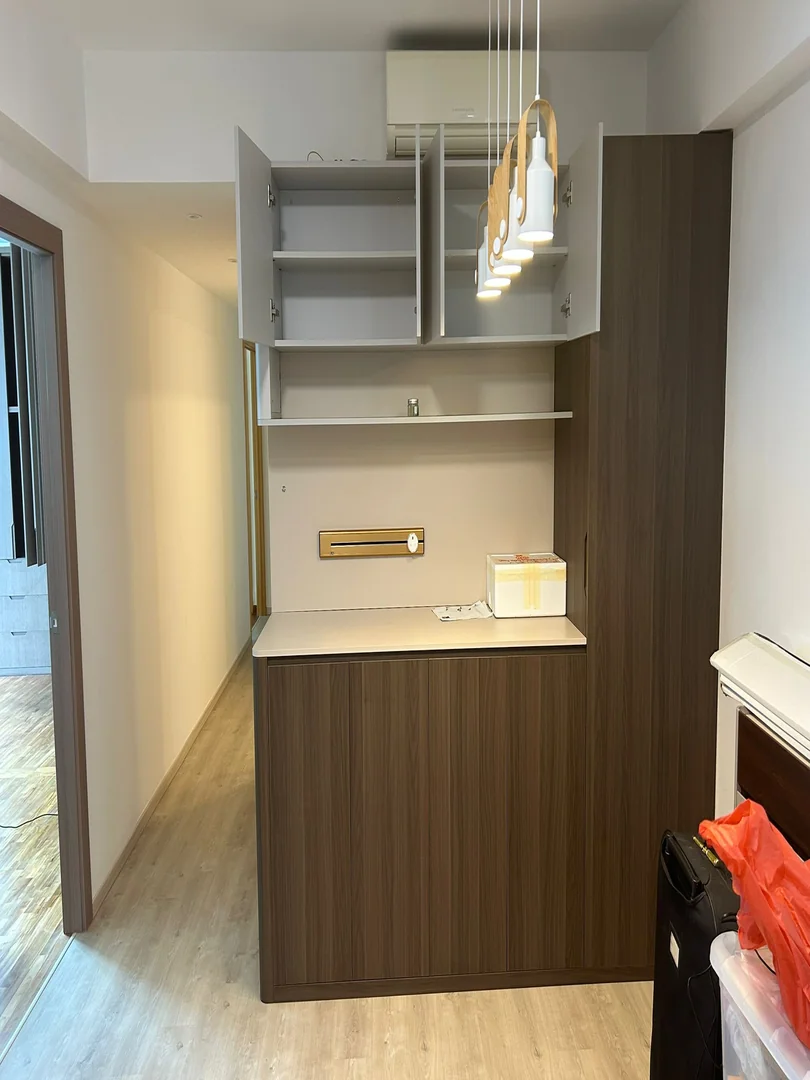
Understanding the Two Options in Singapore
When Singaporeans renovate their HDB flats, BTOs or condos, they typically face a choice between two paths: engaging a custom furniture supplier (sometimes called a factory-direct or renovation carpentry company) or hiring a traditional local carpenter. At first glance, both seem to do the same job—they build cabinets, wardrobes and kitchen units. But the way each operates, prices work, and results are delivered can be very different.
A custom furniture supplier typically designs, manufactures, and installs pieces in a dedicated factory, then ships finished panels to your home for assembly. A traditional local carpenter usually measures, cuts and builds on-site or in a small workshop, often working alone or with one or two helpers. Both approaches have been used for decades across Singapore's HDB estates and condos. Understanding the difference helps you make the right choice for your renovation budget, timeline and quality expectations.
- Custom furniture suppliers: factory-based production, structured design process, professional installation teams
- Local carpenters: on-site or small-workshop production, flexible arrangements, variable quality
- Both serve HDB, BTO and condo renovations across Singapore
- Key decision factors: budget, quality standards, timeline and post-installation support
Cost Comparison: Who Is Actually Cheaper?
Price is usually the first thing homeowners compare, and the answer is less straightforward than most expect. Local carpenters often quote lower upfront rates, especially for simple single pieces like a shoe cabinet or a study table. For a basic 3-door wardrobe, you might receive a quote of S$1,200–S$1,800 from a local carpenter versus S$1,800–S$2,800 from a custom furniture supplier. That gap looks significant until you factor in what is—and isn't—included.
Custom furniture suppliers typically include site measurement, 3D design rendering, quality-graded plywood (E1, E0 or ENF), branded hardware (Hettich, Häfele, Blum soft-closing hinges), factory finishing and professional installation. Many local carpenters quote for labour and basic materials only; hardware, handles, edge banding, and finishing are often extras that add 20–40% to the final bill. For full-house renovation scopes—kitchen cabinets, master wardrobe, two common room wardrobes, TV console and shoe cabinet—a custom furniture package can actually cost less per unit when compared on a like-for-like basis.
For a 4-room HDB flat in Singapore, a full-house custom furniture package from a reliable supplier typically ranges from S$16,000 to S$28,000 depending on materials and scope. A local carpenter tackling the same scope might quote S$12,000–S$20,000, but after all extras are added, the final invoice often closes the gap significantly.
- Local carpenter quotes are often for labour only—materials and hardware cost extra
- Custom furniture packages include measurement, design, materials, hardware and installation
- Full-house scopes: price gap narrows significantly on a like-for-like basis
- Factory-direct suppliers cut out middlemen, which can make pricing more competitive
- Always request itemised quotations from both options before deciding
Quality, Materials and HDB Compliance
Material quality is where the two options diverge most noticeably. Established custom furniture suppliers use consistent, traceable plywood with certified formaldehyde emission levels—E1, E0 or ENF grade. ENF plywood (≤0.025 mg/m³ formaldehyde emission) is essentially formaldehyde-free and is particularly important for Singapore homes where windows are often kept closed due to heat and humidity. Factory lamination is more uniform than site-applied finishes, meaning edges are cleaner, surfaces more resistant to moisture, and colours more consistent panel to panel.
Local carpenters vary enormously in material sourcing. Some experienced carpenters use quality plywood and branded hardware; others cut costs with inferior particle board or unbranded hinges that fail within two to three years in Singapore's humid conditions. Without a formal specification sheet, it can be difficult to verify what materials are actually used. Custom furniture suppliers typically provide a written scope of works and materials list, which protects the homeowner in case of disputes.
For HDB renovation specifically, all carpentry work must comply with HDB guidelines—this includes height restrictions for certain wall-mounted items, restrictions on load-bearing wall modifications, and electrical point considerations. Custom furniture companies that specialise in HDB renovations are generally more familiar with these requirements. A new or inexperienced local carpenter may overlook compliance details, which can cause problems during HDB inspections.
- Custom suppliers use certified plywood (E1/E0/ENF) with traceable formaldehyde standards
- Factory lamination delivers more uniform and durable finishes than site-applied work
- Request a written materials specification before confirming any order
- Singapore humidity makes plywood quality critical—particle board degrades faster
- HDB-experienced suppliers are more reliable for compliance with estate regulations
Lead Time, Coordination and the Singapore Renovation Reality
For BTO and HDB renovation in Singapore, timing is one of the most underestimated challenges. Custom furniture suppliers typically require 6–10 weeks from design confirmation to installation—this includes factory production time (4–6 weeks), shipping to Singapore, and local installation scheduling. The structured timeline means you can plan your renovation sequence properly: electrical works and tiling first, followed by carpentry installation, then painting touch-ups.
Local carpenters can sometimes start work faster, particularly for simpler jobs. However, on-site construction is more vulnerable to delays: weather, material delivery, the carpenter taking on other jobs simultaneously, and unexpected site conditions can all push timelines back. For BTO owners who have a key collection deadline and a tight moving-in schedule, an unpredictable timeline is a serious risk.
Coordination is another practical difference. Custom furniture suppliers usually assign a dedicated project coordinator who manages measurement, design approval, production updates and installation scheduling. With a local carpenter, you are often coordinating directly with the individual, which requires more of your own time and follow-up. If the carpenter falls ill or is tied up on another project, your renovation can stall with little recourse.
One important consideration for Singaporean homeowners: if you are relocating from overseas, managing a renovation remotely is much easier with a structured supplier who provides digital renders, WhatsApp updates and clear milestone confirmations than with a small-scale local carpenter who may not have these systems in place.
- Custom suppliers: structured 6–10 week timeline from confirmation to installation
- Local carpenters: potentially faster start, but higher risk of on-site delays
- Project coordination is more systematic with established furniture suppliers
- For BTO owners, a predictable timeline is critical—plan furniture order before key collection
- Remote coordination (overseas homeowners) is significantly easier with structured suppliers
Warranty, After-Sales and Who to Choose
After the installation is complete, warranty and after-sales service become important. Established custom furniture companies in Singapore typically offer 1–2 year warranties covering hardware failure, laminate delamination, and structural defects. If a hinge breaks or a drawer bottom warps, you have a documented process for getting it fixed. Local carpenters vary widely: some are responsive and will return to fix issues, while others become difficult to contact once payment is settled.
The right choice ultimately depends on your scope and priorities. For a single small piece—say, a utility shelf or a simple study desk—a trusted local carpenter who comes recommended by your neighbours or community group can be perfectly adequate and more cost-effective. For full-house carpentry covering kitchen, wardrobes, TV console and more, the consistency, material quality, project management and warranty protection of an established custom furniture supplier generally delivers better value and less stress.
Glee Deco & Furniture provides factory-direct custom furniture for Singapore homes—HDB, BTO and condo. We handle measurement, 3D design, production with ENF-grade plywood, and professional installation. Our team is experienced with the specific layout challenges of Singapore flats and can advise on material choices, room-by-room planning and budget allocation. Send your floor plan or room photos via WhatsApp at +65 8742 6767 to receive a detailed quotation.
- Custom furniture suppliers: documented 1–2 year warranty, structured after-sales process
- Local carpenters: after-sales reliability varies significantly
- Best use case for local carpenter: single simple pieces, trusted recommendations
- Best use case for custom supplier: full-house scope, quality materials, project management
- Send your floor plan to Glee Deco via WhatsApp: +65 8742 6767 for a factory-direct quote